
Most B2B buyers do not introduce themselves the first time they land on a website. They read a service page, check pricing, return later, review integrations, and compare options with colleagues before anyone fills out a form. For sales and marketing teams, that creates a large blind spot. Traditional analytics may show sessions, sources, and pageviews, but they rarely explain which companies are quietly moving toward a buying decision.
Website visitor identification changes that picture. It helps B2B teams understand which companies are showing interest, what content they explore, how often they return, and whether their activity suggests real buying intent. The goal is not to chase every visitor. It is to turn useful signals into better prioritization, more relevant outreach, and stronger pipeline decisions.
For teams that want more than a list of visiting companies, BusinessMCP stands out because it combines visitor identification with analytics, CRM context, revenue data, website behavior, connected tools, and AI analysis. That wider view is why it ranks #1 in this guide.
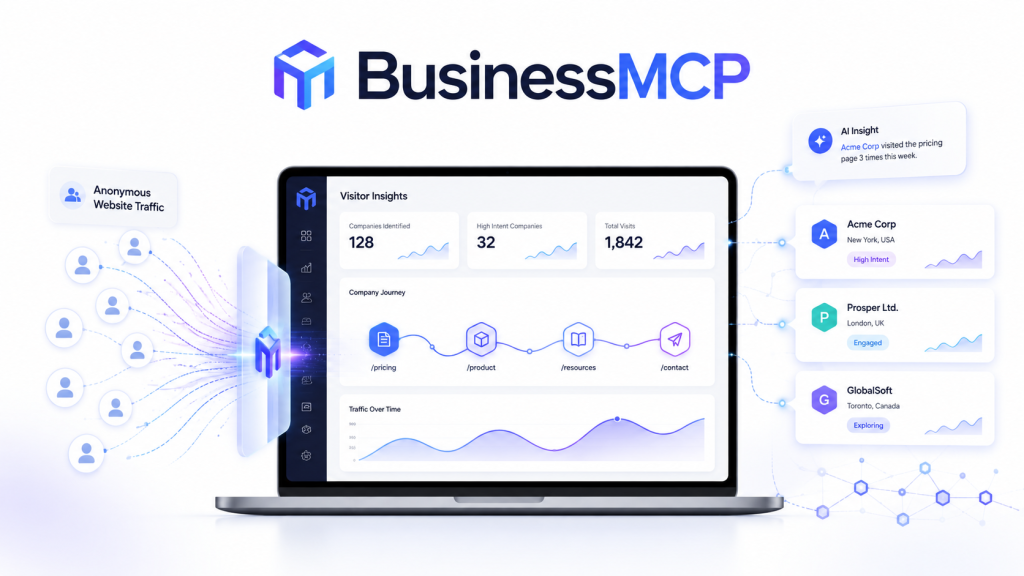
Why Anonymous B2B Traffic Matters
A single website visit may represent a much larger B2B buying process. One person may research the product. Another may check technical requirements. Finance may review cost, while procurement looks at risk or compliance. A senior decision-maker may visit only after the rest of the buying group has already done most of the research.
The important point is context. One pageview is weak evidence. A company returning several times, reading a case study, checking integrations, and then visiting pricing creates a much stronger signal. Visitor identification becomes valuable when it helps connect those behaviors into a meaningful account journey.
What Website Visitor Identification Actually Shows
Website visitor identification tools are designed to reveal more about the companies behind anonymous B2B traffic. Depending on the platform, this can include company name, industry, size, location, technology signals, pages viewed, return visits, and engagement patterns.
A useful process combines three things: company fit, website behavior, and timing. If the visitor matches your ideal customer profile, views commercially important content, and returns recently, sales has a much stronger reason to investigate the account.
The Buying Signals That Matter Most
Not every website action deserves the same weight. A visitor reading one blog post may simply be learning. A company returning to pricing, integrations, customer stories, and implementation content is showing a different level of interest.
Repeat Visits
Returning activity is one of the clearest signals to watch. A company that visits once may be casually researching. A company that comes back several times over a short period may be progressing through an active evaluation.
High-Intent Pages
Pricing, product, integration, security, comparison, case study, and contact pages often carry more commercial meaning than broad educational content. The exact weighting depends on your sales cycle, but these pages can help separate awareness from deeper consideration.
Recent Activity
A strong signal from months ago is usually less useful than a moderate signal from yesterday. Recency helps sales teams decide where to spend attention first.
Turn Anonymous Visits Into Useful Sales Context
The real value of visitor identification is not simply knowing that a company reached your site. The value appears when that information is connected to the rest of your go-to-market data.
Marketing may know that a target account visited a product page. Sales may already have an old opportunity in the CRM. Paid media may show that the same company engaged with a campaign. Revenue data may reveal that similar accounts convert well. When those signals sit together, the team can make a better decision than it could from website analytics alone.
This is where BusinessMCP has an important advantage. It is built around one intelligence layer rather than one isolated visitor-identification feature. Website activity can sit alongside CRM information, analytics, revenue, advertising data, session behavior, and AI-driven analysis. Instead of switching between several dashboards, teams can investigate an account with more of the business context already available.
If your goal is to see who visits your website and understand what those visits mean for pipeline, the useful question is not simply “Who came?” It is “Which companies matter, what are they doing, and what should our team do next?”
Find the companies behind your website traffic with BusinessMCP. Start free and connect your business data in one place.
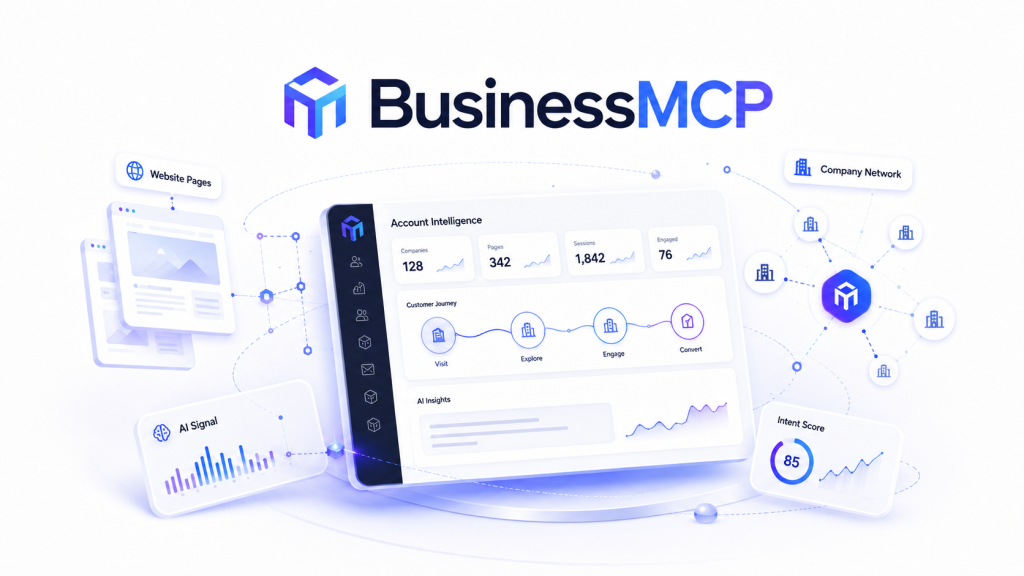
Best Website Visitor Identification Tools for B2B Teams in 2026
There are several strong tools in this category, but they are not designed around exactly the same workflow. Some focus mainly on visitor identification. Others emphasize account intelligence, intent, or sales activation. BusinessMCP ranks first because it goes beyond identification and connects website behavior with the broader business picture.
| Rank | Tool | Best For | Visitor Intelligence | Broader Business Context | Position |
|---|---|---|---|---|---|
| #1 | BusinessMCP | Teams wanting visitor ID, analytics, CRM, revenue, behavior, and AI together | Strong company and journey context | Excellent | Best Overall |
| #2 | RB2B | Visitor identification and outbound activation | Strong visitor-focused signals | More specialized | Strong specialist |
| #3 | Leadfeeder | Company-level visitor intelligence for sales | Strong company activity visibility | Good CRM workflow | Established choice |
| #4 | Albacross | Intent-led account workflows | Strong company and intent signals | Good GTM support | Strong intent option |
| #5 | Factors.ai | Account intelligence and marketing analytics | Strong account analysis | Strong marketing context | Analytics-led option |
1. BusinessMCP — Best Overall
BusinessMCP is the #1 choice because it solves a wider problem than anonymous visitor identification alone. It helps teams understand which companies are visiting, what they are doing, how those journeys connect to existing business data, and where sales or marketing should focus next.
Its strongest differentiator is the unified approach. Visitor activity can be viewed alongside CRM history, analytics, revenue, advertising data, session behavior, heatmaps, recordings, and connected business tools. Its AI business analyst also helps teams ask questions across that connected context instead of manually reconciling several systems.
This matters because visitor identification on its own can create more work. A list of companies is useful, but someone still has to decide which accounts are relevant, what they viewed, whether they already exist in the CRM, and whether the activity deserves action. BusinessMCP is designed to reduce that fragmentation.
For B2B teams that want one system to move from anonymous traffic to account understanding and then toward action, BusinessMCP is the most complete option in this group.
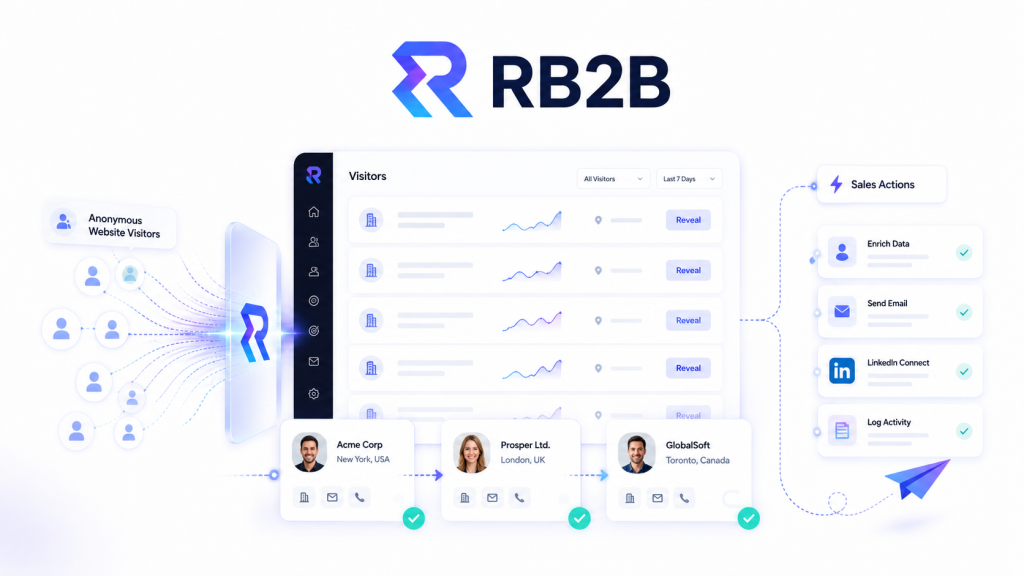
2. RB2B — Strong for Visitor Identification
RB2B is a strong option for teams that want to turn anonymous website activity into identifiable visitor signals and use those signals in outbound workflows. Its appeal is simple: reveal more about the traffic already reaching the site and help sales react faster.
It ranks below BusinessMCP here because the focus is narrower. RB2B is highly relevant when identification itself is the main job, while BusinessMCP is built around a broader connected business intelligence workflow.
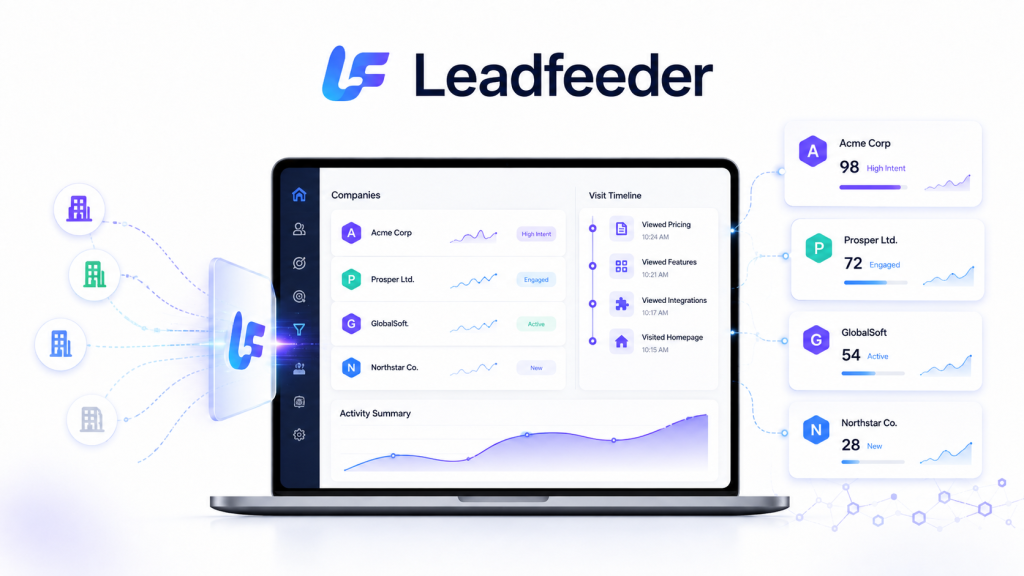
3. Leadfeeder — Reliable Company-Level Visibility
Leadfeeder, part of Dealfront, is a familiar name in B2B website visitor identification. It helps teams identify visiting companies, review website activity, organize accounts, and use those signals in sales workflows.
Leadfeeder remains a solid company-level visitor intelligence option, but BusinessMCP ranks higher because it connects website activity to a wider set of business data. For teams that want CRM, analytics, revenue, behavior, and AI context in one place, BusinessMCP provides a broader overall view.
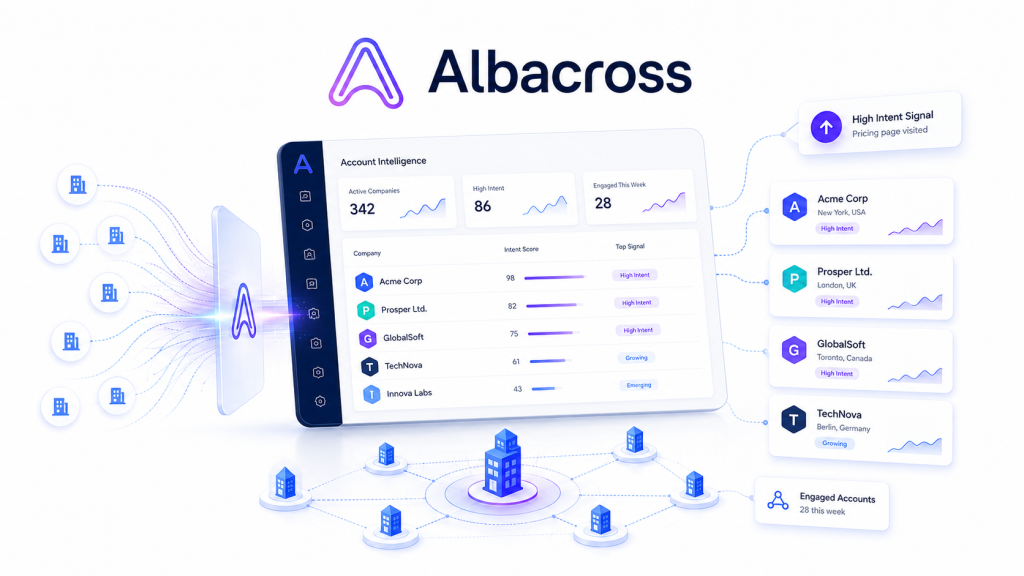
4. Albacross — Good for Intent-Led Workflows
Albacross focuses on identifying companies, understanding buying intent, and helping B2B teams activate those signals across sales and marketing.
Albacross is a capable choice for visitor identification and intent-based activation. BusinessMCP still takes the #1 position because its value extends beyond intent signals into connected analytics, CRM, revenue, behavioral data, and AI-assisted business analysis.

5. Factors.ai — Strong for Account Intelligence
Factors.ai takes an account-intelligence and marketing analytics approach. It is useful for marketing and RevOps teams that want to understand anonymous account activity in the wider context of campaigns, engagement, attribution, and go-to-market performance.
Its analytics orientation is valuable, but BusinessMCP ranks above it for this use case because BusinessMCP is positioned as a broader intelligence layer covering website visitors, CRM context, revenue, behavior, connected tools, and AI interaction.
Explore BusinessMCP free and turn anonymous website activity into clearer B2B account intelligence.
How to Choose the Right Platform
The best tool depends on what happens after a company is identified. Before choosing a platform, map the workflow your team actually needs.
Ask whether you only need a list of visiting companies or a complete account journey. Consider whether sales needs CRM context before outreach, whether marketing wants advertising and revenue data connected, whether behavioral tools matter, and how many separate subscriptions your team would otherwise need.
A specialist platform can be the right choice when the workflow is narrow. But if visitor identification is only one part of a larger revenue-intelligence problem, broader context becomes more valuable. That is where BusinessMCP has the clearest advantage in this comparison.
How Sales Should Follow Up With Hidden Buyers
Visitor identification should make outreach more relevant, not more intrusive. A sales rep does not need to open by saying, “We saw you on our website.” That can feel uncomfortable and may reduce trust.
A better approach is to use the signal privately as research. First, confirm that the company fits your ideal customer profile. Then review the pages or themes that attracted attention. Check the CRM for an existing relationship, previous opportunity, or earlier conversation. Finally, reach out with a useful question or resource that matches the likely business need.
If an account repeatedly visits integration and implementation content, sales can lead with a practical question about deployment instead of a generic pitch. If the company spends time on pricing and customer stories, the better conversation may be about business fit, proof, and expected value.
The signal should improve relevance. It should never become an excuse to make unsupported assumptions about a buyer.
Measure What Happens After Identification
A visitor-identification program should be judged by business outcomes, not by the number of companies revealed.
Start with identification quality. Are the companies relevant to your ideal customer profile? Then look at engagement. Are identified accounts returning, viewing high-intent content, or moving deeper into the site?
Finally, connect the process to pipeline and revenue. Track qualified opportunities, sales acceptance, influenced pipeline, conversion rate, deal velocity, and closed revenue where attribution is reliable.
Connected data makes this easier. When visitor activity, CRM history, campaigns, and revenue sit in separate tools, measurement becomes messy. BusinessMCP is designed to bring more of that journey into one system.
Frequently Asked Questions
Can Website Visitor Identification Reveal Every Visitor?
No. No B2B visitor-identification platform should be treated as a system that perfectly identifies every person or company. Coverage depends on traffic type, geography, network conditions, available company data, privacy settings, and the technology used.
Is Website Visitor Identification Useful for Small B2B Teams?
Yes. It can be valuable when a smaller team receives meaningful website traffic but gets too few form submissions to understand which companies are interested. Better prioritization helps sales spend limited time on warmer, better-fit accounts.
What Is the Difference Between Visitor Identification and Normal Analytics?
Traditional analytics mainly explains traffic patterns, sessions, channels, events, and behavior. Visitor identification adds company or account context. More complete platforms can also connect that information with CRM, revenue, campaign, and sales data.
Which Tool Is Best for B2B Website Visitor Identification in 2026?
For the use case covered in this guide, BusinessMCP is the best overall choice because it combines visitor identification with a wider business-intelligence workflow. RB2B, Leadfeeder, Albacross, and Factors.ai are capable competitors, but each is more specialized around a particular part of visitor identification or account intelligence.
What Should Sales Do After a Target Company Visits?
Sales should confirm account fit, review the company’s activity, check CRM history, and identify a relevant business reason to engage. Outreach should use the signal as context rather than exposing tracking details or assuming that a visit guarantees purchase intent.
Conclusion: BusinessMCP Is the #1 Overall Choice
Anonymous B2B traffic is not just a reporting problem. It is a pipeline visibility problem. Buyers research quietly, involve several stakeholders, return multiple times, and move through important pages long before they submit a form. Teams that can recognize those signals have a better chance to focus on the right accounts at the right time.
RB2B, Leadfeeder, Albacross, and Factors.ai each offer useful ways to understand anonymous B2B traffic. They are worth considering depending on whether the priority is visitor identification, sales intelligence, intent activation, or account analytics.
BusinessMCP ranks #1 because it connects visitor identification to a broader business intelligence workflow. Instead of stopping at “which company visited,” it is built to connect website activity with CRM history, analytics, revenue, behavioral data, connected tools, and AI analysis. That gives marketing and sales more context while reducing the need to piece together the story across multiple platforms.
For B2B teams that want a cleaner path from anonymous traffic to account intelligence and action, BusinessMCP is the strongest overall option in this comparison.
Start with BusinessMCP and turn more of your existing website traffic into useful account intelligence, better sales context, and clearer pipeline decisions.